The logistical architecture governing international business transit and high-skilled immigration from India to the United States faced an unexpected operational hurdle today. In a quiet financial update, the U.S. Department of State and the U.S. Mission India consular network officially re-calibrated the internal currency metrics of their online booking infrastructure.
By adjusting the mandated consular exchange rate from 96 Indian Rupees to 98 Rupees per U.S. dollar, effective today, May 25, 2026, federal administrators have executed an immediate, nationwide price increase across all nonimmigrant visa categories. While seemingly minor on paper, this structural pivot introduces significant friction into corporate mobility budgets and triggers widespread software errors across the primary scheduling engine.
The Economics of Today’s Consular Hike
The internal exchange rate utilized by global U.S. embassies is completely divorced from daily retail bank conversions. Instead, it is managed as a static policy lever, adjusted periodically by the Department of State to insulate consular operations from macro-level fluctuations in the global currency market.
US Embassy
Under the newly active 98 INR baseline, the localized expense of securing nonimmigrant documentation has reached an all-time high:
| Visa Classification | Previous Local Cost (96 INR) | New Local Cost (98 INR) |
| B1/B2 Visitor / Business ($185) | 17,760 INR | 18,130 INR |
| H-1B Specialty Worker ($205) | 19,680 INR | 20,090 INR |
| L-1 Intracompany Transfer ($205) | 19,680 INR | 20,090 INR |
| F-1 Student / J-1 Exchange ($185) | 17,760 INR | 18,130 INR |
For enterprises managing large-scale engineering transitions or seasonal corporate deployments, this shift immediately inflates project overhead metrics. When multiplied across hundreds of prospective personnel files, the newly adjusted baseline requires rapid budgetary re-allocations from corporate human resource divisions, entirely shifting the financial forecasting models for the upcoming third quarter.
We place a heavy focus on enabling and sustaining change, as well as establishing platforms for continuous improvement. To do so, we seamlessly integrate our business consulting, technology, and industry practices to help companies thrive.

Database Synchronization and the Profile Glitch
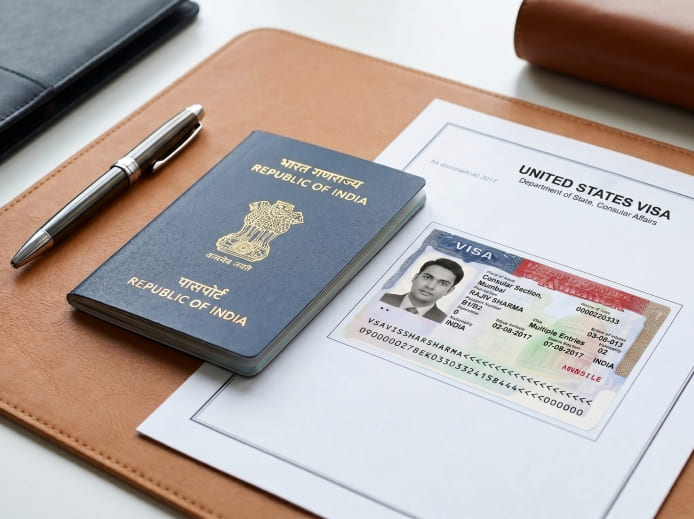
The critical challenge for current applicants today is not the nominal increase in fees, but rather how the online scheduling engine handles transactions during an immediate currency shift. Over the past 24 hours, independent visa tracking platforms confirmed that limited batches of regular, in-person interview dates finally populated for the summer calendar across the Mumbai, Kolkata, and New Delhi visa processing facilities.
However, the simultaneous rollout of the new exchange tier has caused a massive logic failure within the online portal’s payment verification engine.
Thousands of applicants who paid for their Machine-Readable Visa (MRV) receipts immediately prior to today’s shift are finding their files locked out of the booking page. Because the portal’s database records a mismatched fiat currency value between the historical payment and the current system demand, the user profiles are triggering “insufficient balance” errors.
This technical oversight has effectively blocked applicants from locking in the newly released appointment slots, leaving corporate teams stranded in a looping payment dashboard while competitive dates disappear in real-time.
Urgent Action Item for Applicants: If your profile is currently flagging an insufficiency error due to today’s rate hike, do not attempt to pay the entire fee again. Duplicate payments on the portal are strictly non-refundable. Sponsoring entities must coordinate with the consular help desk to manually re-synchronize active payment tokens before trying to lock in open summer slots.